Commute: 247 mi real-world range | typical overnight home charging
Road-trip (10-80%): 25 min (est.) | +71 mi in 10 min | peak 150 kW
Home charging (AC): 11.5 kW | 0-100% 8 h 25 min
Seats & cargo: 5 seats | 25.5 cu ft | max 59.1 cu ft
Battery warranty: 8 years / 100,000 miles
Overview
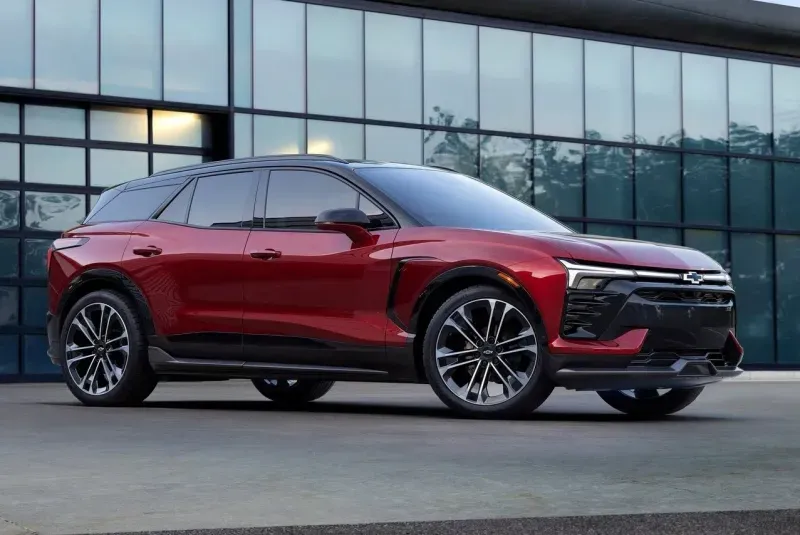
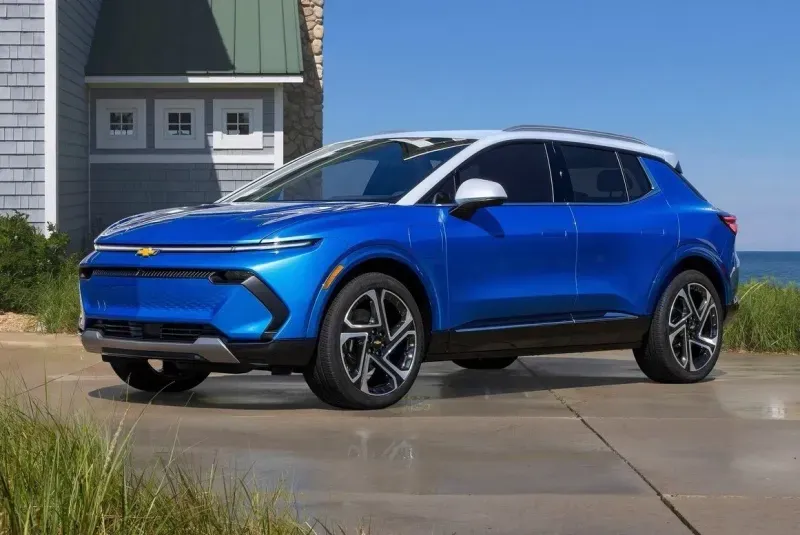
Chevrolet Blazer EV 2LT 2024 overview
Chevrolet Blazer EV 2LT 2024 comes as an electric SUV in FWD form and 5 seats. 0–60 mph: 6.5 s, well above the class median of 5.4 s.
The battery has 85 kWh. It uses a 400 V electrical system.
Charging includes AC charging up to 11.5 kW (J1772); DC fast charging up to 150 kW (CCS Combo 1). For DC fast charging, it adds ~71 mi in 10 min; Cargo volume is 25.5 cu ft.
Class comparison
Chevrolet Blazer EV 2LT 2024 compares with 293 SUVs and stands out for more cargo space and slower acceleration. Cargo volume is above the class median; 25.5 cu ft vs 20.2 cu ft; 5.3 cu ft higher, +26%. 0-60 mph is slower than the class median; 6.5 s vs 5.4 s; 1.1 s slower, +20%. Peak DC power is below the class median; 150 kW vs 175 kW; 25 kW lower, -14%. Worth considering if you can live with lower peak DC power.
Real Range
City - Mild Weather
351.7 miles
City - Cold Weather
238 miles
Highway - Mild Weather
223 miles
Highway - Cold Weather
173 miles
Real range estimates The values shown here are estimates calculated by BEV-Database using EPA range/efficiency data (where available) and the usable battery capacity of the car. “Mild weather" represents driving in roughly 68-77 °F without heavy use of climate control, while "Cold weather" reflects winter conditions with the cabin heater on (around 14 °F). "Highway" figures assume steady cruising at about 65 mph-70 mph. These figures are not official test results or guarantees. Real-world range will vary depending on speed, temperature, traffic, road profile, payload, tires and driving style.
BEVDB estimates use EPA-rated (or derived) consumption and usable battery capacity to model city/highway ranges; the combined value averages the four scenarios.
Reminder: Range and energy consumption figures are estimates. Actual results may vary depending on weather, driving style, terrain, and other conditions.