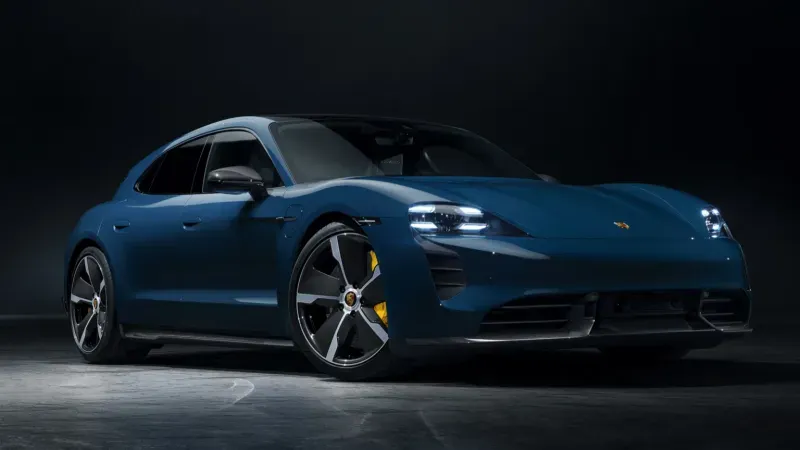
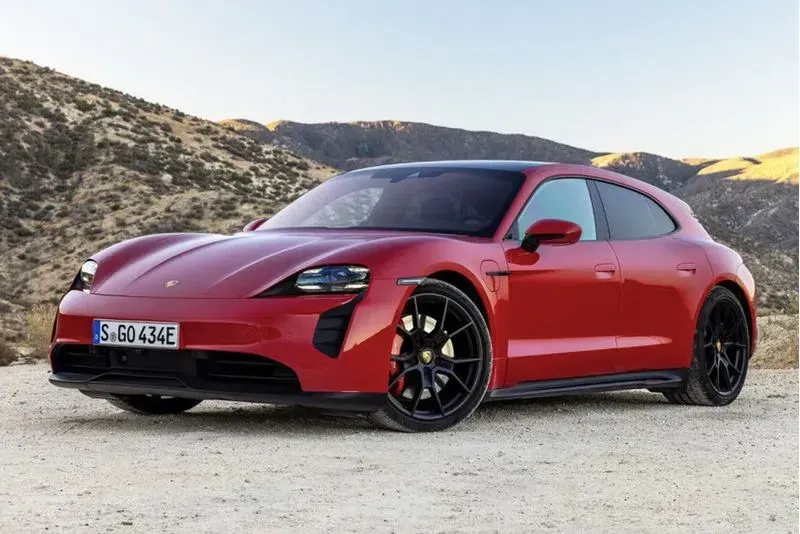
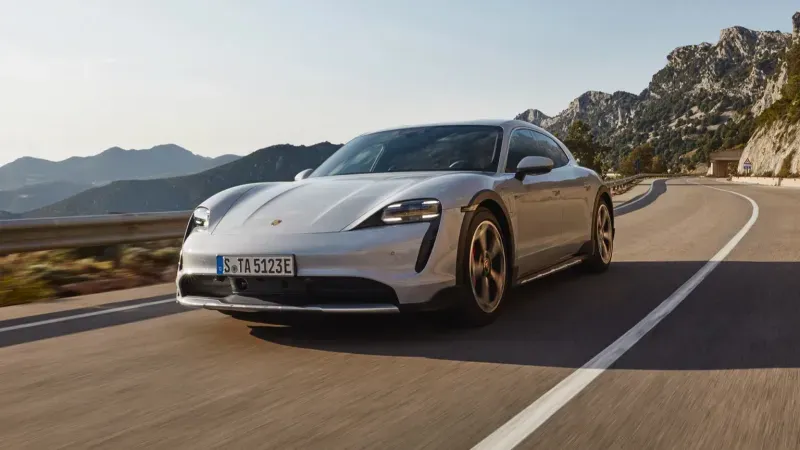
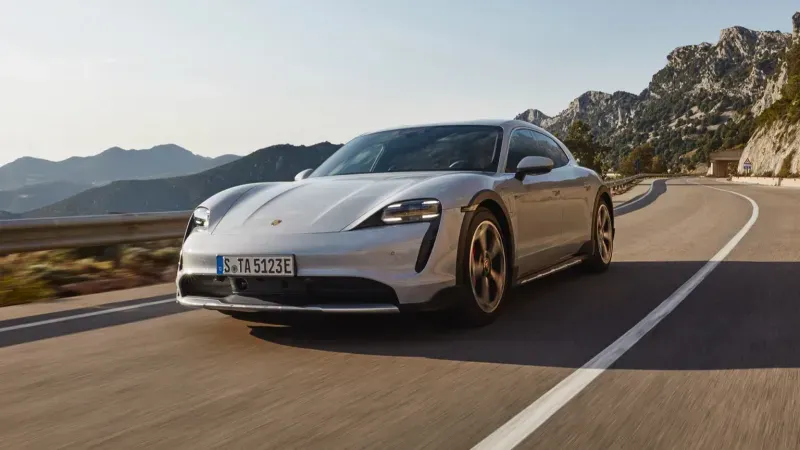
Porsche Taycan 4 Cross Turismo 2021

Starting price: €96,454

Porsche Taycan 4 Cross Turismo 2021 image 1

Ownership summary

Verdict:

Porsche Taycan 4 Cross Turismo 2021 makes the most sense as an AWD electric wagon for premium daily use and relaxed longer drives. The range story is the difference between 389-456 km official, about 309 km in mixed use and about 242 km in cold highway driving.

In daily use, home charging takes about 8 h 39 min from 0-100%; on trips, the 10-80% DC estimate is about 16 min (est.), which should make highway stops manageable. The practical side is documented with 5 seats, 446-1212 L cargo and 160,000 km (period not listed) battery warranty. The main caveat is that real-world planning should use the BEVDB mixed estimate rather than the top WLTP figure. Range confidence is high, while specs completeness is partial.

Best fit
Daily drivingHome chargingFamily usePremium comfort

Main caveatReal-world planning should use the BEVDB mixed estimate rather than the top WLTP figure.

Range reality

Official WLTP range
389-456 km
BEVDB mixed estimate
309 km
Cold highway estimate
242 km
Mixed vs top official
-147 km / -32%

Charging reality

Home charging
0-100% 8 h 39 min
Fast charging
10-80% 16 min (est.)
10-80% range added
218 km Based on BEVDB combined consumption

Practical ownership

Seats
5
Cargo
446-1212 L
Battery warranty
160,000 km (period not listed)

Data quality

Range confidence
High
Specs completeness
Partial
Estimate basis
WLTP data + BEVDB model
Missing key data
Battery warranty period
City - Mild Weather386 km
City - Cold Weather287 km
Highway - Mild Weather288 km
Highway - Cold Weather242 km

Estimates of actual range. The values given here are BEVDB estimates calculated from WLTP data and usable battery capacity, based on the BEVDB model. The BEVDB real-range card uses four fixed reference scenarios: City (Mild), Highway (Mild), City (Cold), and Highway (Cold). Mild means +20°C (70°F) without intensive climate-control use; cold means -10°C (14°F) with cabin heating. City speed is 50 km/h (30 mph), and highway speed is 110 km/h (70 mph). These figures are not official test results. Actual range will vary depending on speed, temperature, road conditions, road profile, load, tires, and driving style.
Have questions about Real Range?
Nominal Capacity93.4 kWh
Usable Capacity83.7 kWh
Battery TypeLithium-ion
Architecture800 V
Warranty PeriodNo Data
Warranty Mileage160000 km
Cathode MaterialNCM721

Source: Manufacturer

Have questions about Battery?

Home / Destination

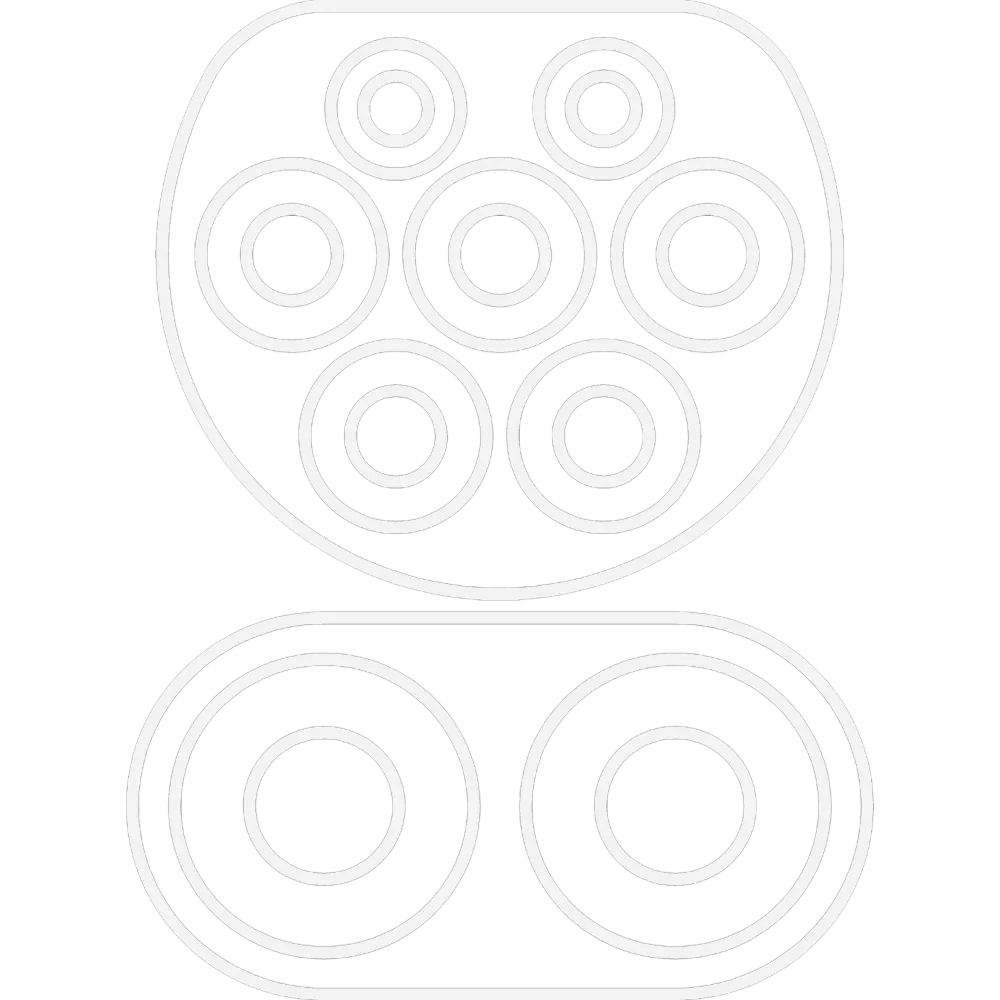
Charging TypeType 2Type 2 icon
Port LocationFront Right
Charge Power11 kW
Charge Time AC (0-100%)8 h 39 min
Charge Speed (mild)40 km/h
Charge Speed (cold)30 km/h

Fast Charging

Fast Charging PortCCS Combo 2CCS Combo 2 icon
Port LocationFront Right
Charge Power (max)268 kW
Charge Power (10-80%)216 kW
Charge Time DC (10-80%)16 min
Charge Speed (mild)850 km/h
Charge Speed (cold)690 km/h
Autocharge SupportedYes

Plug & Charge

Plug & Charge SupportedYes
Supported ProtocolISO 15118-2

Preconditioning

Preconditioning PossibleYes
Automatically using NavigationYes
Have questions about Charging?

Home / destination charging — 0–100%

AC full charge: fastest ~8h 40m
Charging optionPower usedApprox. timeRange per hourNotes
Wall plug · 230V / 10A2.3 kW41h 20m8 km/h
1-phase 16A · 230V / 16A3.7 kW25h 40m13 km/h
1-phase 32A · 230V / 32A7.4 kW12h 50m26 km/h
3-phase 16A · 400V / 3x16A11 kW8h 40m38 km/h
3-phase 32A · 400V / 3x32A11 kW8h 40m38 km/hLimited by vehicle

Fast charging — 10–80%

Fastest DC 10–80%: ~16 min
Charging optionPower usedApprox. timeRange per hourNotes
CCS 50 kWCCS connector50 kW avg.1h 10m197 km/h
CCS 150 kWCCS connector126 kW avg.28 min496 km/hLimited by charger
CCS 350 kWCCS connector216 kW avg.16 min851 km/hLimited by vehicle

Estimated charging times are based on usable battery capacity, charging power and vehicle charging limits. Peak DC power is usually reached only briefly; average 10–80% power is more useful for estimating real charging time. Actual charging speed can vary by charger output, battery temperature, state of charge, weather, software and battery condition.

Acceleration5.1 sec (0-100 km/h)
Top Speed220 km/h
Total Power350 kW (476 PS)
Total Torque500 Nm
WLTP Consumption (combined)24.4 kWh/100 km
DriveAWD
Have questions about Performance?

Vehicle-to-Load (V2L)

V2L SupportedNo
Max. Output Power-
Exterior Outlet(s)-
Interior Outlet(s)-

Vehicle-to-Home (V2H)

V2H via AC SupportedNo
Max. Output Power-
V2H via DC SupportedNo
Max. Output Power-

Vehicle-to-Grid (V2G)

V2G via AC SupportedNo
Max. Output Power-
V2G via DC SupportedNo
Max. Output Power-
Have questions about Bidirectional Charging?

BEVDB model

Combined real range (estimate)309 km
Combined Energy Use (estimate)26.9 kWh/100 km

BEVDB estimates use WLTP-rated (or derived; falls back to NEDC when WLTP is missing) consumption and usable battery capacity to model city/highway ranges; the combined value is a weighted mix of city/highway and mild/cold scenarios. See the methodology and data sources for inputs, official source boundaries, fallback rules, and versioning.

WLTP Ratings (best case)

Range456 km
Rated Consumption22.4 kWh/100 km

WLTP Ratings (worst case)

Range389 km
Rated Consumption26.4 kWh/100 km
Have questions about Energy Consumption?
Safety Rating5/5
Adult Occupant85%
Child Occupant83%
Rating Year2019
Vulnerable Road Users70%
Safety Assist73%

Source: Euro NCAP

Have questions about Safety?
Length4974 mm
Width1967 mm
Width with Mirrors2144 mm
Height1409 mm
Wheelbase2904 mm
Weight Unladen (EU)2320 kg
Gross Vehicle Weight (GVWR)2885 kg
Max. Payload640 kg
Cargo Volume446 L
Cargo Volume Max1212 L
Cargo Volume Frunk84 L
Roof Load75 kg
Tow Hitch PossibleNo
Towing Weight Unbraked0 kg
Towing Weight Braked0 kg
Vertical Load Max0 kg
Have questions about Dimensions and Weight?
Price€96,454
Seats5 people
IsofixYes, 2 seats
Turning Circle12 m
PlatformVW J1
EV Dedicated PlatformYes
Car BodyWagon
Roof RailsNo
Heat PumpYes
HP Standard EquipmentVaries by country

Reminder: Range and energy consumption figures are estimates. Actual results may vary depending on weather, driving style, terrain, and other conditions. Review the BEVDB methodology for estimate boundaries and source labels. If this model page looks wrong, use Contact and include this page URL plus an official source link when possible.